
Ideeën, details en vakmanschap
Dining table height: choosing legs for your top and chairs
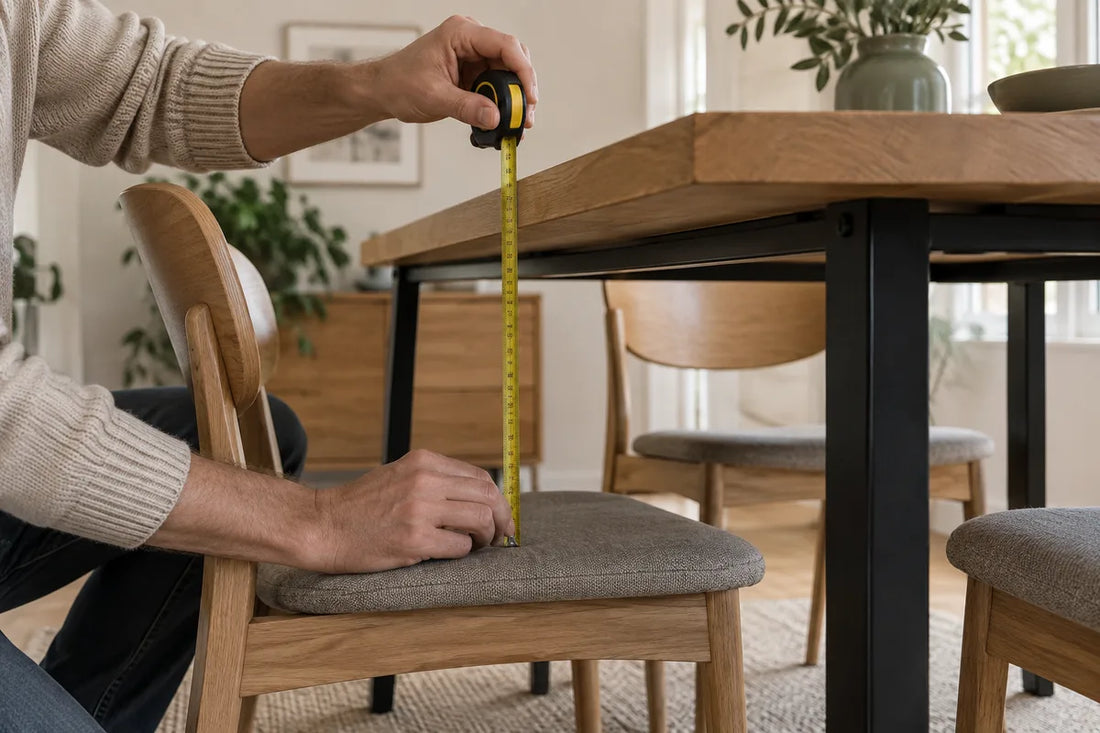
A dining table is commonly around 75 cm high, measured from the floor to the top surface. As a reference, IKEA gives a typical range of 74–76 cm. This is a starting point, not a universal fit: your chairs and the space beneath the top matter too.
You have chosen a tabletop and already own the chairs. With 72 cm legs and a 3 cm top, the finished table will be approximately 75 cm high. Change to a 5 cm top and it becomes 77 cm. Those two centimetres can make a difference when you sit down or slide armrests underneath.
Cover image: AI illustration. Check the actual measurements of your own combination.
Start with your existing chairs
If your current table feels comfortable, measure from the floor to its top surface. Then check the gap between the seat and the lowest part of the structure underneath. These give you two useful comparisons instead of choosing legs from a photograph alone.
We use 75 cm below as a worked example. If you are replacing the chairs too, check their seat and armrest heights before ordering a base.
Calculate the base height you need
Required base height = desired finished table height − tabletop thickness − any extra height from components not included in the base measurement.

| Finished table height | Top thickness | Required base height |
|---|---|---|
| 75 cm | 2 cm | 73 cm |
| 75 cm | 3 cm | 72 cm |
| 75 cm | 4 cm | 71 cm |
Before ordering, check whether the stated height includes the mounting plate and feet. If it does, do not count them twice. Adjustable feet have a permitted adjustment range; they cannot reliably compensate for choosing the wrong leg height.
Check clearance beneath the tabletop
Two tables that are both 75 cm high can feel different. One may have an open underside, while a frame takes up space under the other. Measure where your knees will sit, not only at the edge.
Pull up a chair and sit as you would for a meal. Do your knees touch the frame? Can the armrests slide underneath? Check the end seats as well: a crossbar or angled legs may obstruct them even when the side seats are clear.
If the table is not assembled yet, compare the base drawing with the chair dimensions. A product photograph alone cannot establish the available space.
When to consider a 72 cm base

For a 72 cm base plus a 3 cm top, take a look at the available Thusia variants. Then compare the frame width and length with your top, and the position of the legs with your chairs. The first number in the dimensions is only the beginning of the decision.
For a heavy or thick top, also check the permitted configuration and fixing method. Calculating height does not establish the finished table's safe load capacity.
Before you order
- Write down the desired finished height.
- Measure the actual tabletop thickness.
- Check what is included in the stated base height.
- Measure the chair seats and armrests.
- Check the frame, crossbars and legs at every seating position.
- Compare the top with the selected variant's technical details.
Not sure whether the combination works?
Have the top's length, width, thickness, material and weight ready, together with your target height and chair measurements. Add a link to the base you are considering. These details are more useful for checking compatibility than a photograph of a finished table.
Measurements ready? Browse our metal table legs and compare suitable dimensions.
Meer ideeën voor uw volgende project

How to choose metal table legs: 5 checks before you buy
A practical guide to table height, seating space, tabletop compatibility and mounting details when choosing metal table legs.
Lees de gids : How to choose metal table legs: 5 checks before you buy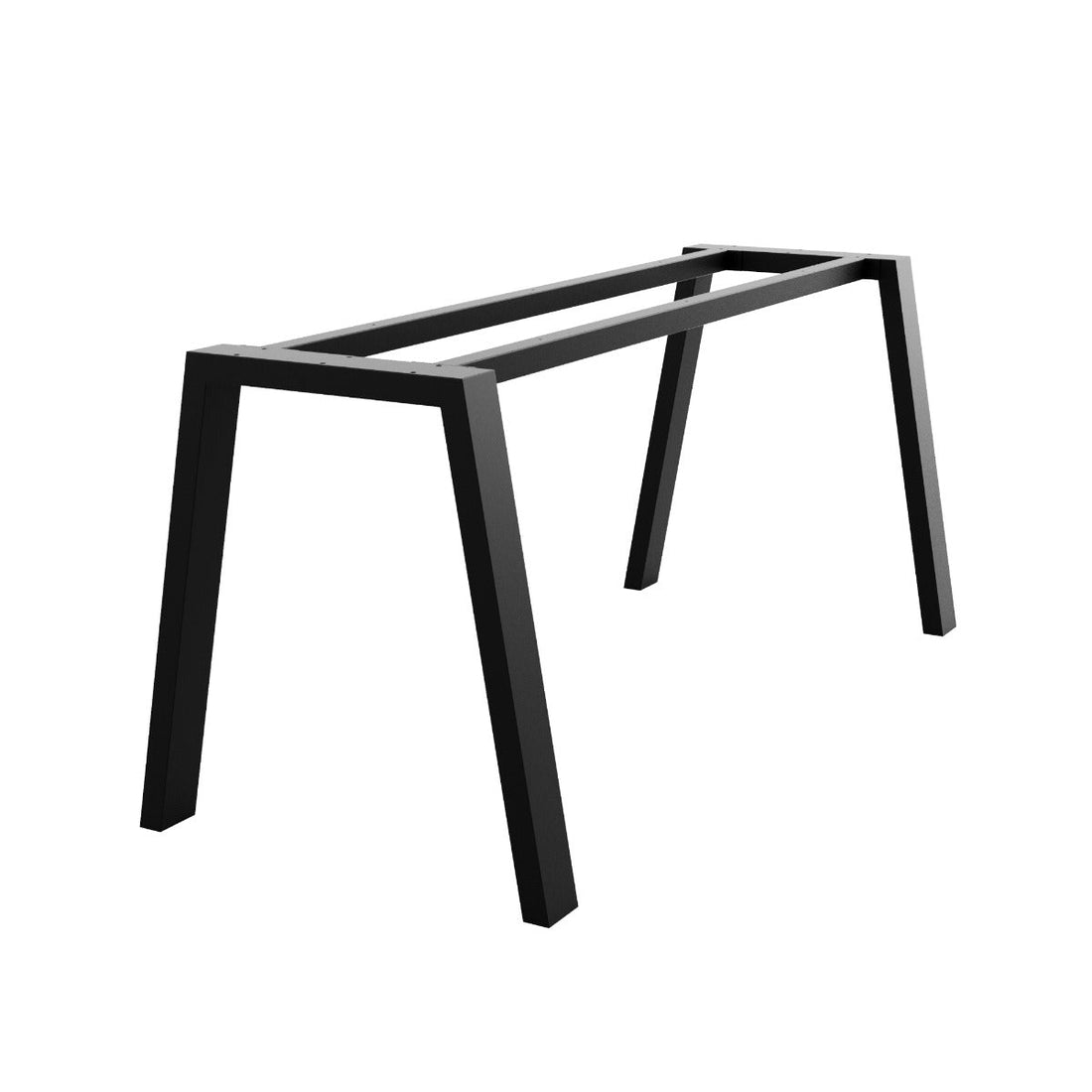
Waarom zijn metalen tafelpoten de ideale oplossing voor moderne interieurs?
Metalen tafelpoten combineren een strak ontwerp met stabiliteit en een lange levensduur. Ontdek hoe u ze combineert met hout, glas of steen.
Lees de gids : Waarom zijn metalen tafelpoten de ideale oplossing voor moderne interieurs?